
The Sunny Side of Savings to Solar Power Cost and Installation in Singapore
Key Takeaways

  • Solar energy locks in electricity rates as low as 5–8 cents/kWh, shielding you from volatile grid tariffs.
  • Modern efficiency standards have slashed the typical payback period for landed properties to just 4–6 years.
  • The streamlined 5-step installation process in Singapore handles everything from BCA permits to grid connection.

Introduction

The shift toward residential solar energy has transitioned from a niche environmental statement to a savvy financial strategy. By installing a solar panel system on a landed property, homeowners are effectively building their own miniature power plant, one that harvests a free resource to run everything from air-conditioning units to electric vehicle chargers. With the national electricity tariff hovering around 27–32 cents/kWh in 2026, the case for self-generation has never been more compelling.

The Mathematics of Monthly Savings

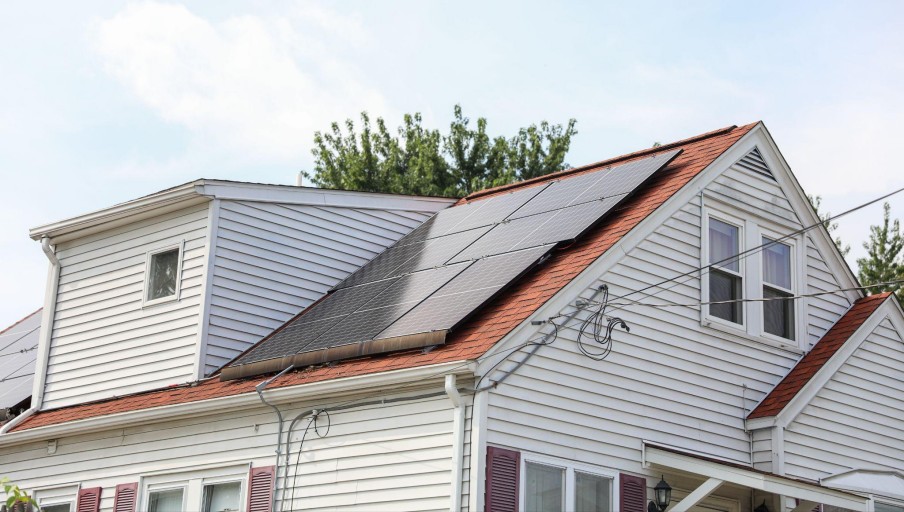
A typical 10 kWp system, which fits comfortably on the roof of a semi-detached or terrace house, can generate enough electricity to offset $300 to $500 of a monthly utility bill. This is a structural change in how you consume energy. When you generate your own power, you are essentially pre-paying for 25 years of electricity at a fixed, significantly lower rate. While the upfront solar power cost for such a system typically ranges between $15,000 and $20,000, the Net Energy Rebate (NER) scheme ensures that any excess energy your solar panels produced during the day is sold back to the grid. This credit then offsets the power you draw at night, creating a virtuous cycle of savings that can lead to a net-zero bill for some high-efficiency setups.

Engineering Excellence with the Modern Solar Panel

Today’s solar technology is worlds away from the bulky, inefficient modules of a decade ago. In the context of solar in SG, the industry has pivoted toward high-efficiency panels that thrive in Singapore’s specific climate. They boast higher wattage per square metre, meaning you can generate more power from a smaller roof footprint. Furthermore, the durability of these systems has improved. This longevity turns a solar panel installation into a generational asset that adds tangible value to the property’s market price, as future buyers increasingly look for certified homes with pre-installed sustainable infrastructure.

Navigating the Installation Journey

The first stage of the tutorial involves a comprehensive site assessment, where engineers use 3D modelling and solar irradiance maps to determine the optimal placement of panels. It is about calculating shading from neighbouring trees or buildings to ensure maximum yield. Following this, the paperwork phase begins. A Qualified Person (QP) or Licensed Electrical Worker (LEW) manages applications to the Building and Construction Authority (BCA) and the Singapore Civil Defence Force (SCDF). They also handle the critical registration for the bi-directional meter, which is the brain that tracks how much energy you export versus what you consume. The physical installation itself is surprisingly swift, often completed within 5 to 7 days once permits are secured. The tutorial continues with the mounting of the frames, followed by the hoisting of the panels. The heart of the system, the inverter, is then installed in a cool, shaded area. This device converts the direct current (DC) captured by the panels into the alternating current (AC) used by your home appliances. Once the bi-directional meter is live, you can monitor your real-time production and savings through a mobile app, providing a satisfying, data-driven look at your home’s new energy independence.

The Macro Perspective

If we look at the national landscape, the momentum behind solar in SG has reached a fever pitch. The government’s recent update to the Singapore Green Plan has created an ecosystem of support that benefits the individual homeowner. Banks have responded by offering green loans with preferential interest rates, and some providers even offer $0-upfront rent-to-own schemes. These financial models mean that the monthly loan repayment is lower than the monthly savings on the electricity bill, making the system cash-flow positive from the very first day. The solar power cost has stabilised at a point where the return on investment (ROI) is significantly higher than traditional fixed deposits or conservative portfolios.

Conclusion

The transition to solar energy is a practical, powerful response to the rising costs of urban living. By harnessing the consistent sun of the equator, Singaporean homeowners can take control of their utility expenses while contributing to a national goal of sustainability. From the significant monthly savings and the rapid payback periods to the sophisticated technology of a modern solar panel, the benefits are as clear as a cloudless noon sky. As the infrastructure for solar in SG continues to mature, those who act now are locking in a decade’s worth of energy security. The sun is shining, the technology is ready, and the mathematics of the solar power cost have never looked better. Ready to see your roof’s potential? Get in touch with PMCE and find out how many panels your home actually needs today.