

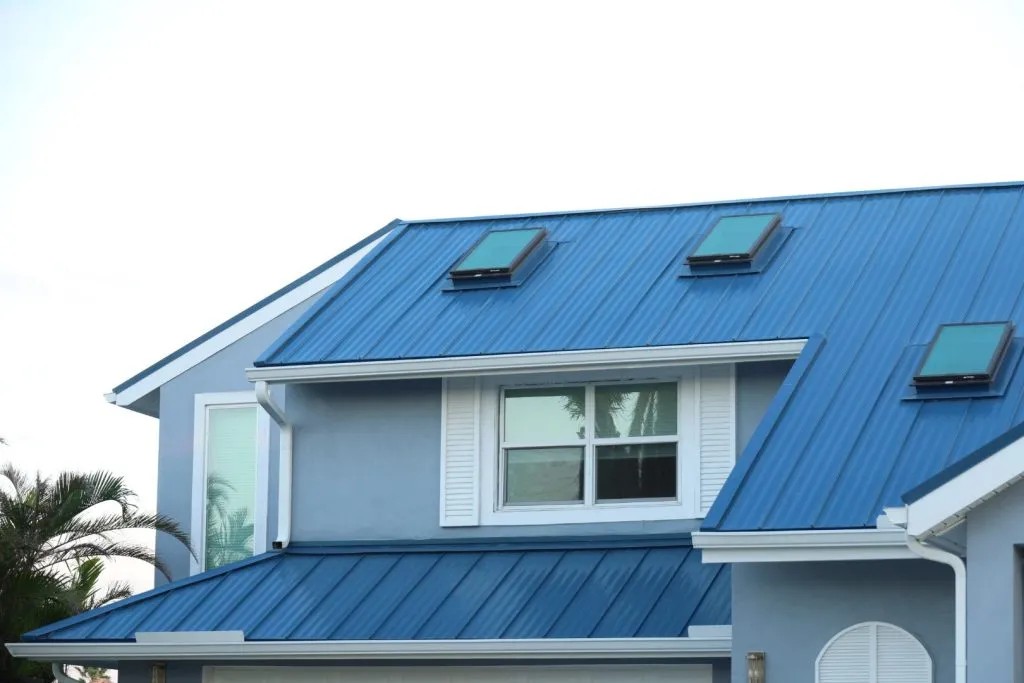
Choose a standing-seam metal roof when you’re building in coastal areas, where salt exposure is high, and the risk of leaks is lower over decades. You’ll pay more for panels, clips, and skilled installation, but you gain concealed fasteners, higher uplift ratings, better wind-driven rain shedding, and easy future add-ons like snow guards or PV clamps without penetrations. Choose 5V crimp for the lowest installed price on simple roof planes and classic barn aesthetics. Next, you’ll see where each profile wins.
Standing Seam vs 5V Crimp: Which Should You Choose?
How do you decide between standing seam and 5V crimp when both qualify as “metal roofing” but behave very differently on the roof? You start with project goals: budget, exposure, and lifecycle cost. If you’re selling premium performance, you’ll usually justify standing seam’s higher material and labor spend with longer panel longevity, fewer service calls, and easier future upgrades like snow retention or PV attachments. If you’re bidding price-sensitive work, 5V crimp can hit targets fast, keep detailing straightforward, and still deliver solid value when you spec the right gauge and coating. Then you weigh aesthetics and branding—standing seam reads modern, while 5V skews traditional—and you confirm that color options are in stock to protect the schedule and margin.
Standing Seam vs 5V Crimp: Seams, Fasteners, Panel Design
Once you’ve weighed budget and lifecycle goals, the real separation shows up in the mechanics—seam geometry, fastener strategy, and panel design—because those details drive leak risk, maintenance frequency, and install labor. Standing seam uses raised, interlocking ribs that hide clips, enhancing seam durability and keeping the surface cleaner for a premium panel aesthetic. 5V Crimp relies on a pronounced V-rib with exposed fasteners; it’s straightforward to lay out, but you’ll plan for tighter screw patterns and faster washer cycles. Panel width and rib height affect material yield, oil-canning sensitivity, and trim complexity, so model your takeoffs early and price labor honestly.
- You’ll feel confident when seams lock tight.
- You’ll hate chasing backing-out screws.
- You’ll appreciate faster panel staging.
- You’ll worry less with concealed hardware.
- You’ll win bids with sharper lines.
Wind Uplift, Leak Risk, and Water Shedding Compared
In high-wind, wind-driven rain zones, wind uplift ratings, leak paths, and water shedding separate standing seam from 5V Crimp fast. With concealed clips and continuous ribs, standing seam typically delivers higher tested wind uplift and fewer exposed penetrations, so you’re buying down the risk of leaks over the roof’s service life. It also sheds water cleanly on lower slopes when specified with appropriate seam height and underlayment.
5V Crimp can perform well, but its exposed fasteners and lapped seams create more potential entry points under pressure cycling. If you’re pushing coastal design pressures, consider enhanced fastening schedules, stitch screws, and butyl at sidelaps to control blow-back and capillary action. You’ll spend more upfront, but you’ll reduce callbacks and warranty exposure.
Install Speed, Tools, and Crew Skill Level
When you’re budgeting labor, standing seam and 5V crimp separate fast based on how panels attach—clips and seaming versus exposed fasteners—and that directly impacts install speed and rework risk. You’ll also spend differently on tools and equipment, from seamers and clip layout gear to simple screw guns and snips, which changes your upfront costs and daily production rate. Your crew’s skill and training level matters too, because tighter tolerances and detail work on standing seam can slow a green team, while 5V crimp is typically easier to train and scale.
Panel Attachment Methods
How you attach the panels will drive your labor hours, tool spend, and the skill level of the crew you’ll need on day one. With standing seam, your panel attachment is typically concealed via clips and clean seam integration, so you spend more time aligning, locking, and managing thermal movement, but you reduce exposed-fastener callbacks. With 5V Crimp, you fasten through the panel and overlap ribs, so you move faster on simple roofs, but you budget for periodic retightening and sealant attention.
- You’ll feel schedule pressure ease on straightforward 5V runs.
- You’ll gain confidence from standing seam’s hidden-fastener watertightness.
- You’ll worry less about oil canning when alignment stays disciplined.
- You’ll chase fewer leaks when penetrations get planned early.
- You’ll protect margins by matching crew skill to complexity.
Required Tools And Equipment
Where your install speed really shifts is at the tool bench: standing seam demands seamers (hand or mechanical), clip-setting gear, accurate layout tools, and often on-site rollforming or preformed panel handling, so you’ll spend more upfront on equipment and a tighter, better-trained crew to avoid seam mislocks and oil canning. You’ll also stage panel carts, lift points, and edge protection to prevent finish damage. For 5V crimp, you’ll move faster with basics: screw guns with depth control, chalk lines, snips, hemmers, sealant guns, and a simple hand crimper for laps. In a cost comparison, 5V’s tooling is lighter and cheaper, while standing seam’s mechanical seamer and rollformer can pay back on large runs. Factor noise considerations too: mechanical seaming and rollforming add jobsite sound.
Crew Skill And Training
Why does the same roof layout fly with a 5V crew but bog down with standing seam? Standing seam demands tighter tolerances, disciplined sequencing, and consistent clip alignment, so small training gaps snowball into rework and slower install speed. With 5V, your crew can move fast with basic layout skills and fewer specialized steps, keeping labor costs predictable.
- You feel schedule pressure when panels won’t lock cleanly.
- You risk crew safety when rushed crimping happens near edges.
- You burn budget chasing oil-canning and waviness.
- You lose confidence when a new hire misses clip spacing.
- You win margins when training turns technique into repeatability.
Invest in mock-ups, torque standards, and QC checkpoints; you’ll unlock standing seam’s innovation without bleeding hours.
Standing Seam vs 5V Crimp Cost: Upfront vs Long-Term
When you compare standing seam to 5V crimp, you’ll see the biggest gap in upfront material and labor—standing seam typically costs more per square and takes more specialized installation time. 5V crimp often wins on initial budget, but you’ll want to price in lifetime maintenance, fastener-related service calls, and periodic repairs around penetrations and laps. To pick the better value, you should total the installed cost plus the expected maintenance and repair costs over the roof’s service life.
Upfront Material And Labor
A clean way to compare standing seam and 5V crimp is to separate what you’ll pay on day one—materials and labor—from what you’ll spend later in maintenance and repairs. With standing seam, your upfront material costs typically increase because you’re buying wider pans, engineered clips, and higher-performance coatings. Your upfront labor also rises: you’ll need precise layout, specialized roll-forming or panel handling, and installers trained to lock seams cleanly.
5V crimp keeps entry costs lean with simpler panels and faster fastening, so crews move quickly and bids stay sharp. But you’re still choosing a system—opt for the profile that matches your budget and your tolerance for complexity.
- You’ll feel sticker shock—or relief—immediately.
- You’ll see schedule pressure tighten or ease.
- You’ll sense quality control become critical.
- You’ll gain confidence with cleaner detailing.
- You’ll sleep better with predictable install costs.
Lifetime Maintenance And Repairs
Durability drives your long-term roofing budget long after the last panel goes down. With standing seam, you’ll typically see fewer leak points because the fasteners stay concealed, so maintenance routines focus on clip integrity, seam sealants at penetrations, and periodic coating checks. That lowers call-backs and extends lifetime durability, especially on low-slope or high-wind projects.
With 5V crimp, you’ll maintain exposed screws and neoprene washers; expect more scheduled re-tightening, replacement, and localized sealant work around fasteners and laps. Repairs can stay inexpensive per incident, but they add up as UV and thermal cycling age washers and elongate holes. If you want predictable O&M, standing seam usually wins; if you can manage routine fastener service, 5V remains viable.
Best Applications: Coastal Homes, Barns, and Modern Builds
Where should you spec standing seam versus 5V crimp to get the best performance per dollar—especially on coastal homes, agricultural barns, and modern builds? Choose standing seam when you need coastal resilience: hidden fasteners reduce salt-driven corrosion, and taller seams shed wind-driven rain. Use 5V crimp when budget, speed, and classic barn aesthetics matter; exposed fasteners are serviceable, and panels install fast on simple roof planes. For modern builds, standing seam delivers crisp lines and easy integration with snow guards and PV clamps without penetrations, lowering long-term risk. You’ll feel confident when you spec for:
- Storm nights that won’t let you sleep
- Salt air that eats hardware
- Tight bids you must win
- Clean elevations clients demand
- Future upgrades you want to enable
Frequently Asked Questions
Can Either Profile Be Installed Over Existing Shingles or Metal?
Yes—you can install standing seam or 5v crimp over existing shingles or metal, but you’ve got to verify structure, code, and substrate condition first. You’ll typically add a ventilated batten/purlin grid or an approved recover underlayment to create a flat, dry plane and protect fasteners. Standing seam costs more but improves uplift and watertightness; 5v crimp installs faster yet needs tighter fastener control.
Which Panel Profile Is Easiest to Repair or Replace After Storm Damage?
You’ll usually find 5V Crimp easiest to repair or replace after storm damage. After a hail-and-branch hit on a small coastal bungalow, you can pull a single damaged panel, swap fasteners, and reinstall without unseaming adjacent runs. You’ll use straightforward storm-damage repair steps and proven patching techniques, such as butyl-backed patches or screw-and-washer replacements. Standing seam often forces you to disengage seams, raising labor costs and downtime.
How Do Standing Seam and 5V Crimp Handle Snow Guards and Retention Systems?
Standing seam handles snow guards best with clamp-on retention systems that attach to seams, so you avoid penetrations, cut leak risk, and speed installs, though hardware costs more. You’ll spec engineered rail systems for higher snow loads and cleaner load transfer. 5V crimp usually needs screw-down guards or brackets fastened through flats or ribs, which lowers upfront cost but adds sealant, maintenance, and fastener pull-out risk in ice.
Are There Color, Finish, and Warranty Differences Between the Two Profiles?
Yes—your color options, finish durability, and warranties often differ by panel type and supplier. **Cool, crisp, cutting-edge coatings** set the tone: standing seam commonly offers a broader range of premium colors and high-performance PVDF for longer fade/chalk protection, often with stronger, longer warranties. You’ll see 5V crimp more often in standard polyester or SMP at lower cost, with shorter coverage. You should compare coil specs, film thickness, and warranty transfer terms.
Which Profile Is Quieter During Heavy Rain or Hail?
Standing seam is usually quieter than 5V crimp during heavy rain or hail because you fasten it with concealed clips, avoid exposed fastener chatter, and often install it over solid decking with underlayment. You’ll still hear impact noise unless you add acoustic underlayment, thicker-gauge panels, and attic insulation. If you’re cost-focused, spend on insulation/underlayment first; it reduces noise more than switching profiles alone.
Conclusion
Choose standing seam when you need maximum wind uplift resistance, concealed fasteners, and low leak risk—especially on coastal or modern builds. You’ll pay more upfront, but you’ll likely save on callbacks, coating repairs, and fastener replacement over time. Pick 5V crimp when budget and speed drive the job; it installs fast with basic tools and smaller crews. Like checking a jobsite pager, weigh lifecycle cost against install time.
