

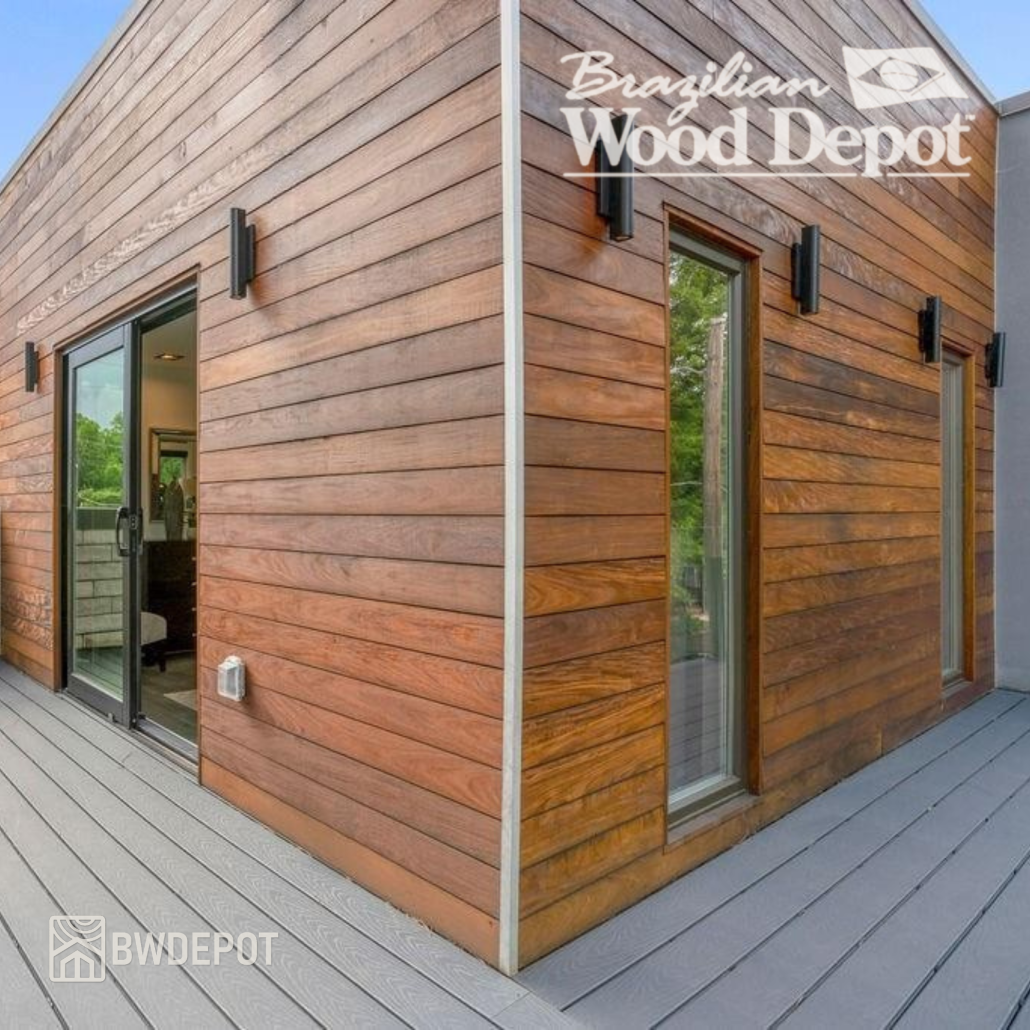
Ipe is particularly attractive for demanding exterior projects. This Brazilian hardwood is exceptionally dense and is naturally resistant to insects and decay. Its rich coloration and natural grain also make it suitable for architectural applications where the siding itself is intended to become an important design feature.
Start With the Wall Assembly
Hardwood siding should not be considered independently from the wall behind it. A RainScreen system intentionally creates a cavity between the exterior cladding and the underlying wall assembly.
Furring strips provide this separation, giving incidental moisture a pathway to drain while allowing air to circulate behind the hardwood. Because natural wood responds to changing environmental moisture, providing drying potential behind the boards is an important part of the system.
Contractors considering Ipe RainScreen Siding should therefore plan the furring, airflow, drainage, and siding layout together rather than treating them as unrelated stages of construction.
Determine Board Orientation Early
The direction of the siding influences both the appearance of the building and the planning of the supporting assembly. Horizontal boards can emphasize long, wide elevations, while vertical boards can visually increase the height of a wall.
Some architectural projects may also use different orientations on separate sections of the building. For example, horizontal hardwood could define a main elevation while vertical siding highlights an entrance or upper story.
Whatever design is selected, the supporting structure should maintain the drainage and ventilation required behind the boards.
Account for Ipe’s Natural Density
Ipe’s density is one of the characteristics that contributes to its reputation as a durable exterior hardwood. It also means installers should approach the material differently than lightweight softwood siding.
Cutting, fastening, and handling methods should be appropriate for dense Brazilian hardwood. Planning the fastening system before work begins can reduce unnecessary improvisation on the jobsite and help maintain a consistent finished appearance.
Use Concealed Fastening for Clean Lines
Visible fasteners can become especially noticeable across large hardwood elevations. Brazilian Wood Depot’s Real RainScreen Siding system is designed to work with proprietary H-Clips that conceal the attachment points behind the visible board faces.
This helps maintain consistent spacing while allowing the grain and natural coloration of Ipe to remain the focus. The result can be particularly effective on contemporary homes and commercial buildings where clean architectural lines are a priority.
Plan Corners and Openings Before Installing Boards
Windows, doors, inside corners, outside corners, and transitions to other exterior materials should not be afterthoughts. These locations often determine how polished a completed siding project appears.
Contractors should establish trim and transition details before beginning large siding elevations. Doing so can help maintain consistent board patterns and avoid awkward cuts where hardwood meets another architectural element.
Discuss Natural Color Variation With the Owner
Ipe is real hardwood, so board-to-board variation should be expected. Fresh material generally ranges from medium brown to deep chocolate and can include olive, amber, or reddish undertones.
Understanding this variation before installation can help establish realistic expectations. Instead of trying to make every board identical, installers can consider the overall distribution of tones across the finished wall.
Decide Whether the Ipe Will Weather Naturally
Exterior Ipe changes color with ultraviolet exposure. When left unoiled, its original brown tones gradually transition toward a silver-gray patina.
Some owners prefer this naturally weathered appearance. Others want to maintain richer brown coloration and may periodically clean the siding and apply a UV-protective hardwood oil. Discussing that decision before installation helps establish an appropriate long-term maintenance plan.
Good Planning Supports a Better Finished Exterior
Ipe provides an excellent starting material for premium exterior cladding, but successful installation depends on the entire system. Wall preparation, furring, ventilation, drainage, fastening, trim, board layout, and future maintenance should all be considered before construction begins.
When those details are coordinated, Ipe RainScreen siding can deliver the natural character of genuine Brazilian hardwood while supporting a clean, ventilated exterior design.
Contact Brazilian Wood Depot
Brazilian Wood Depot
6770 Buford Highway NE
Atlanta, GA 30340
Phone: 770-242-0045
Email: Info@BWDepot.com
Hours: Monday-Friday, 7:00 a.m.-3:00 p.m. EST
Brazilian Wood Depot supplies Brazilian hardwood siding, decking, fencing, tongue-and-groove products, deck tiles, fasteners, and related accessories, with nationwide jobsite delivery available from its Atlanta location.
