

Key Takeaways
- Custom curtains eliminate the awkward gap at the top or bottom of non-standard HDB or condo windows.
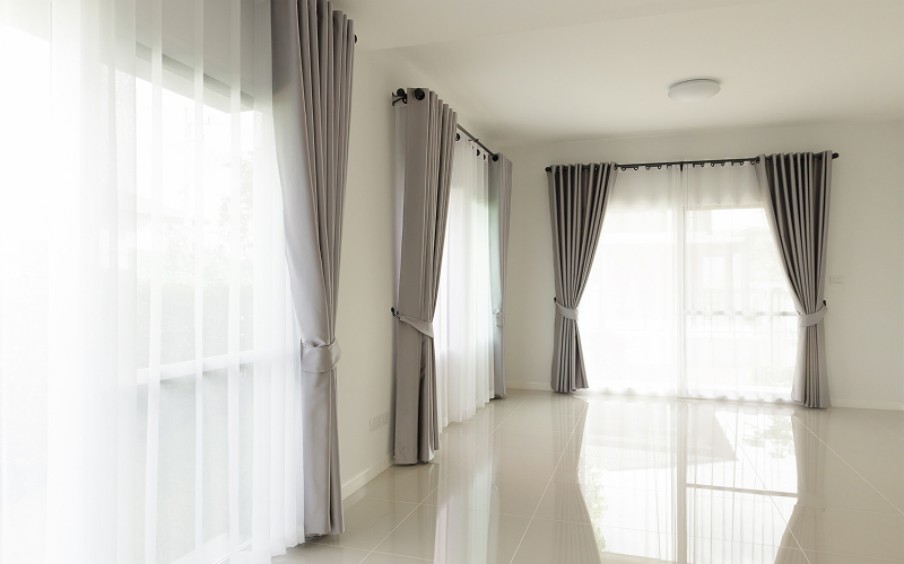
- Custom designs ensure the fabric “stacks” neatly away from the glass to maximize your view.
- Only custom options allow you to perfectly pair day and night fabrics with specific opacity levels for your room’s orientation.
Introduction
Ready-made curtains attract many homeowners because they deliver speed and low upfront cost. A shopper can enter a store, choose a design, and complete installation on the same day. In Singapore homes, this convenience introduces problems that surface after installation. HDB flats and condominiums use varied ceiling heights. Developers design window layouts with bay corners, curved glass, and full-height panels. Sun exposure shifts sharply based on orientation. These conditions force standard curtain sizes into compromises. Custom curtains in Singapore address these issues by matching the actual window dimensions.
Solving Non-Standard Window Heights
Many ready-made curtains come in fixed lengths such as 220 cm or 250 cm. Newer condominiums and some BTO flats use ceiling heights closer to 265 cm. Installing a shorter curtain leaves a visible gap near the ceiling. Light enters through this opening in the morning, and heat collects near the top of the room in the afternoon. Homeowners often try to fix this with pelmets or false ceilings, which increases renovation costs.
Custom curtains in Singapore avoid this issue by measuring from the track to the floor precisely. Installers cut and sew fabric to reach the exact height of the room. The curtain touches the floor evenly and seals the window fully. This fit blocks light more effectively and creates a vertical line that visually raises the ceiling. The result feels intentional instead of patched together.
Handling Bay and Corner Windows Properly
Bay windows and L-shaped glass panels feature prominently in many Singapore homes. These layouts create strong visual appeal but disrupt standard curtain systems. Straight rods and fixed tracks fail to follow angled corners accurately. Panels pull apart at the joints, allowing sunlight to enter and reducing privacy.
Custom curtain tracks bend to match the window’s shape. Installers shape the rail to follow curves or sharp angles without interruption. Curtains glide smoothly across the entire span and meet tightly at the joints. This approach keeps the window usable and avoids awkward overlaps. The curtain behaves as a single system instead of several disconnected pieces.
Controlling Heat Based on Sun Direction
Sun exposure affects comfort more than many homeowners expect. West-facing rooms receive intense afternoon heat that raises indoor temperature quickly. A standard dim out curtain may reduce glare but still allow heat to pass through the fabric. Residents then rely more heavily on air conditioning to compensate.
Custom curtains in Singapore give homeowners direct control over lining and fabric based on each room’s orientation. Homeowners choose blackout or triple-weave linings for west-facing bedrooms to block afternoon heat. They select lighter filtering for living rooms during the day and heavier coverage at night. Installers set the curtain fullness to suit each window. Deeper folds trap air between layers and reduce heat transfer. These choices affect daily comfort and temperature control, not decoration alone.
Improving Fabric Stacking and Daily Use
Ready-made curtains often use limited fabric width to reduce cost. When opened, thick panels stack across a large portion of the window. Natural light drops and views become partially blocked even when the curtains stay open.
Custom curtains use fabric calculated to stack neatly beside the window frame. When opened fully, the glass remains clear. Daylight enters freely, and the room feels larger. This detail matters in compact apartments where every centimetre of usable space counts. Curtains should disappear when not in use, not remain an obstacle.
Supporting Layered Curtain Systems
Many Singapore homes rely on layered curtains that combine sheer daytime coverage with heavier night panels. Ready-made systems rarely align these layers correctly. Lengths differ slightly. Tracks misalign. One layer drags while the other floats.
Custom curtain systems plan both layers together. Installers align tracks, balance lengths, and ensure smooth operation. Sheers filter daylight evenly. Night curtains close completely without bunching. Each layer serves a specific role and works as part of a single installation rather than separate purchases.
Conclusion
Ready-made curtains suit short-term needs or rental spaces with standard windows. In owner-occupied homes, they often create visible compromises that affect comfort and appearance. Custom curtains in Singapore respond to real window dimensions, sun exposure, and daily habits. Accurate measurements, tailored fabric choices, and proper hardware turn curtains into functional parts of the home rather than decorative afterthoughts. For households that live with their windows every day, this precision makes a clear difference.
Contact Window Art Gallery to arrange an on-site measurement and determine how custom curtains in Singapore can address sizing, heat, and layout constraints.
